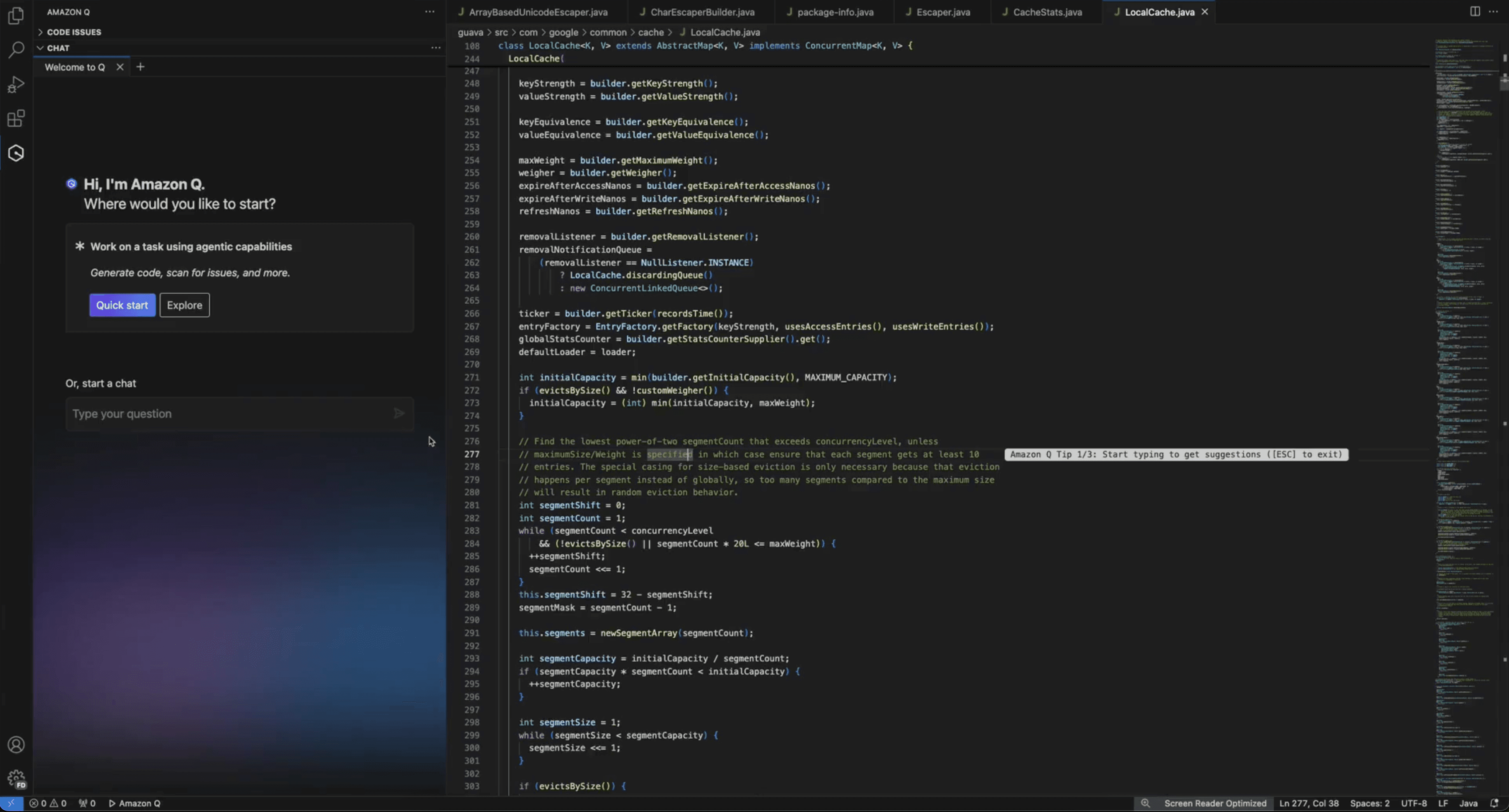
AI Agents for Software Development
How three years of working with AI led to designing the #1 autonomous agent for software development.
Background
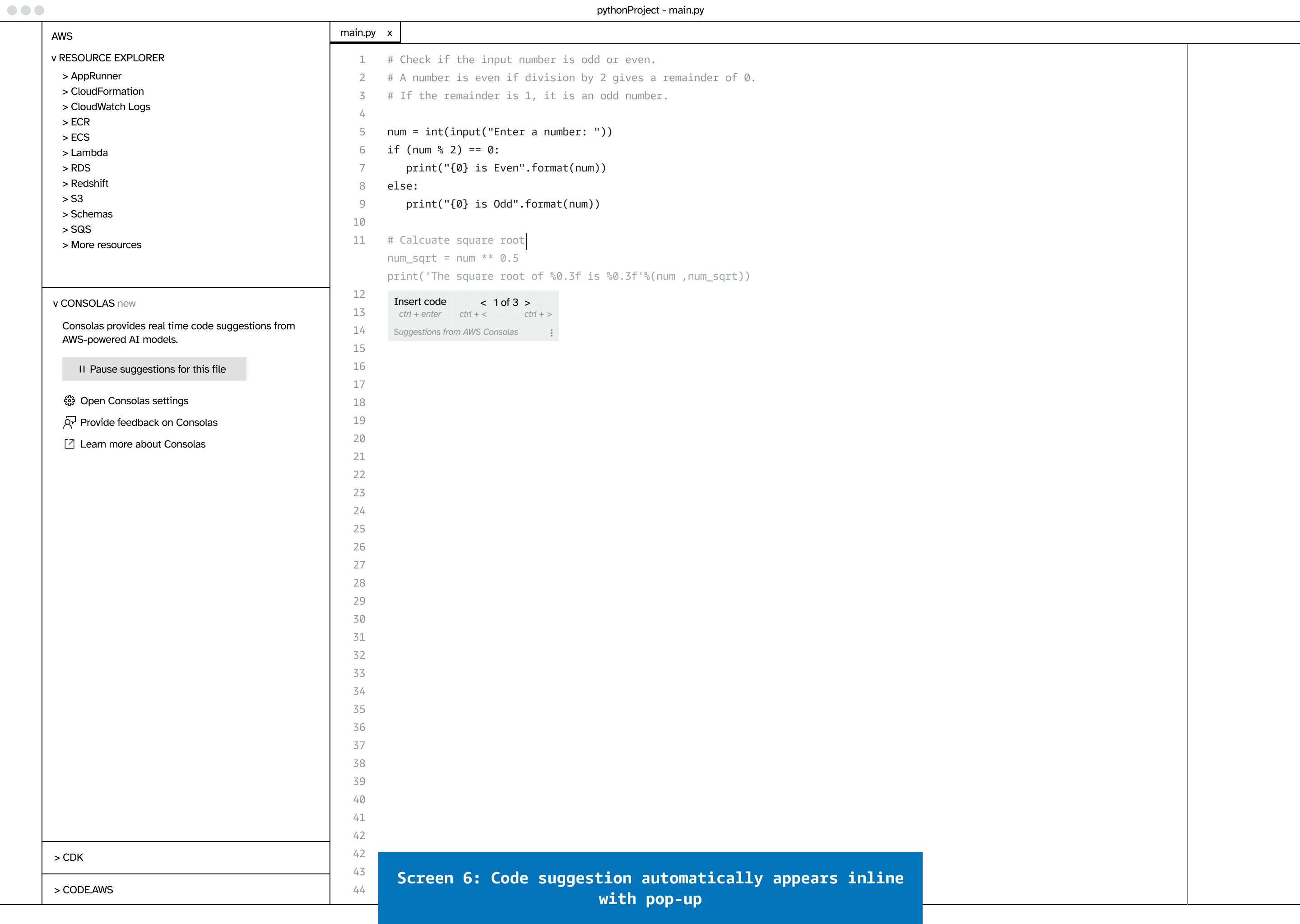
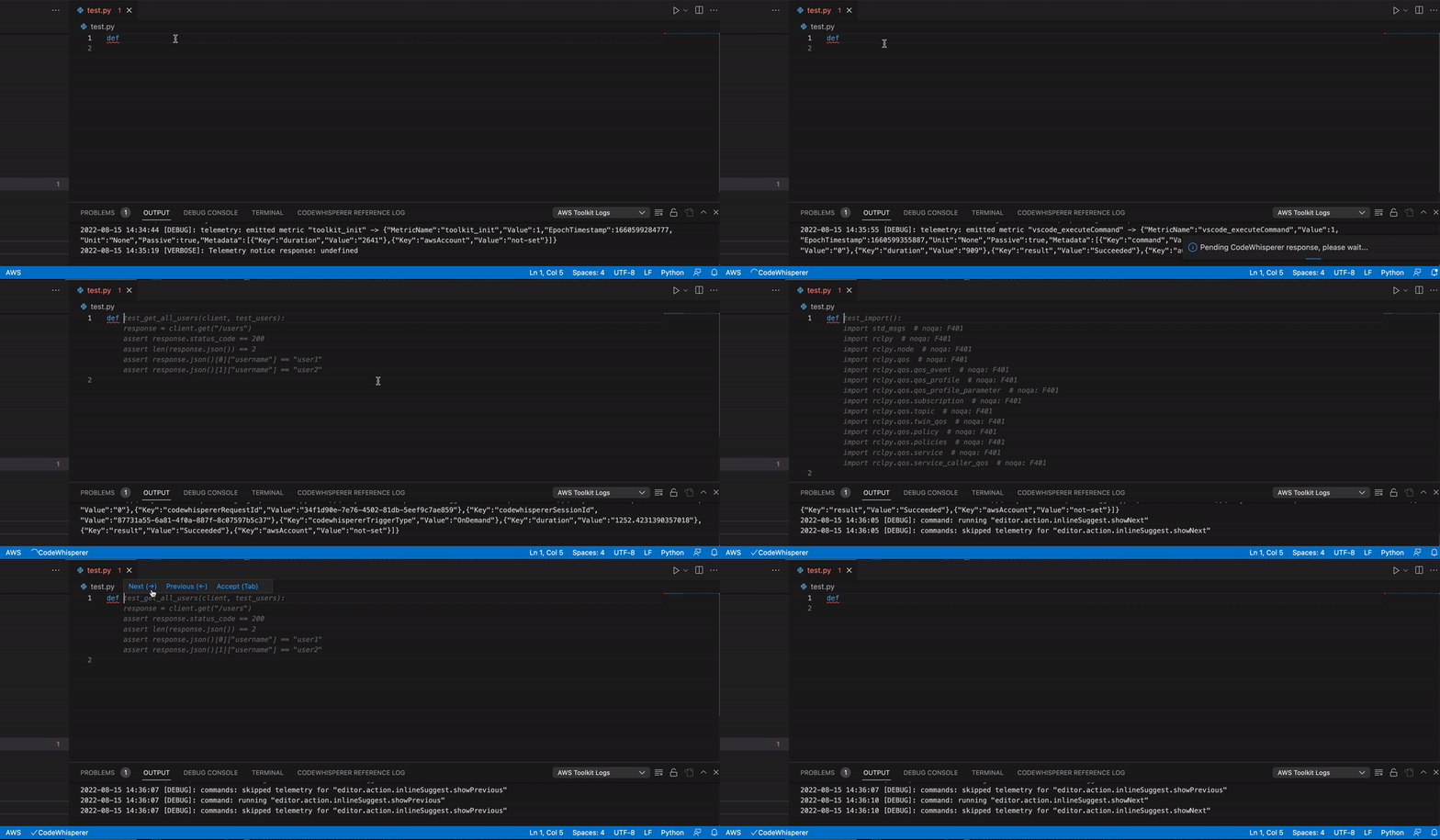
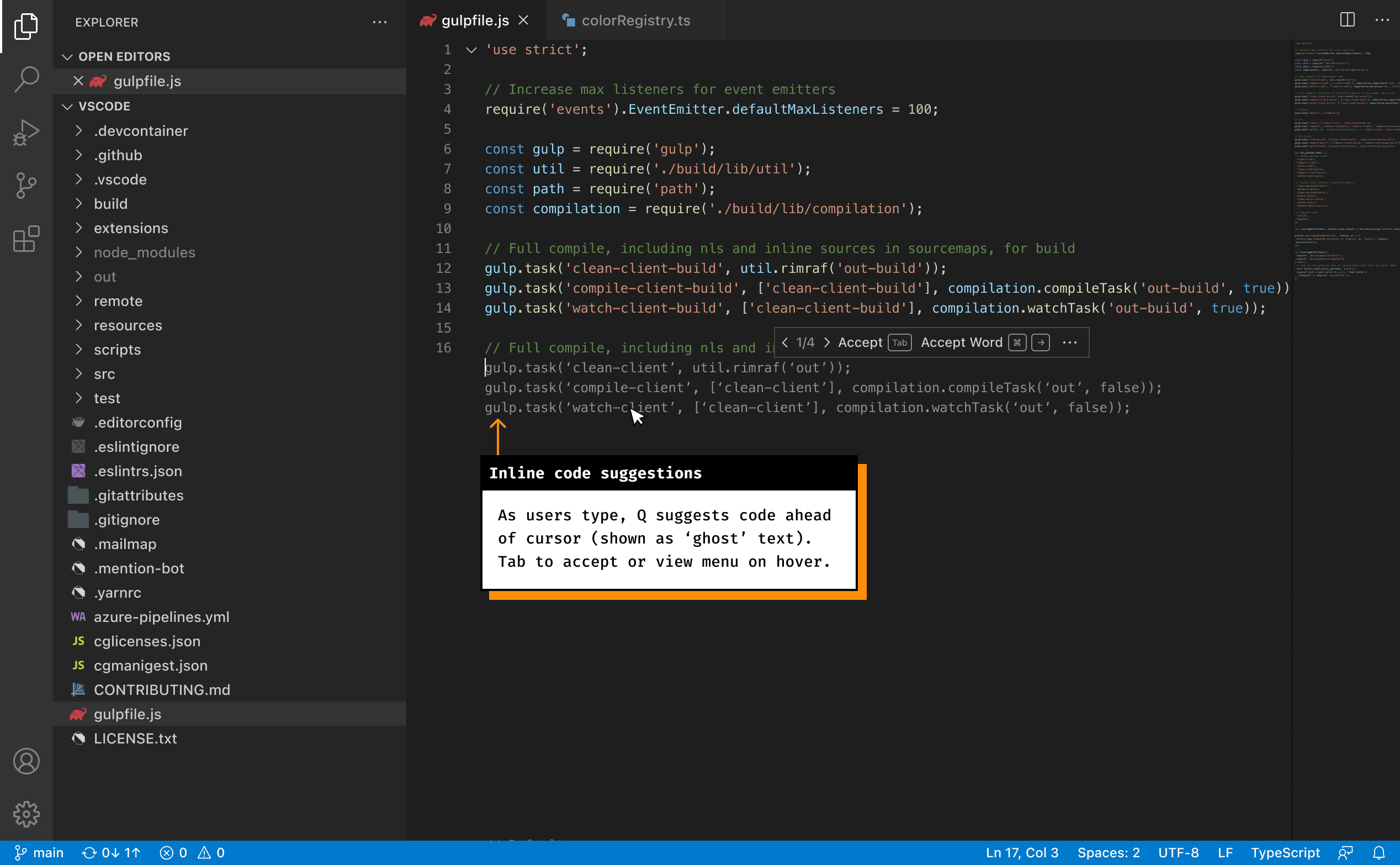
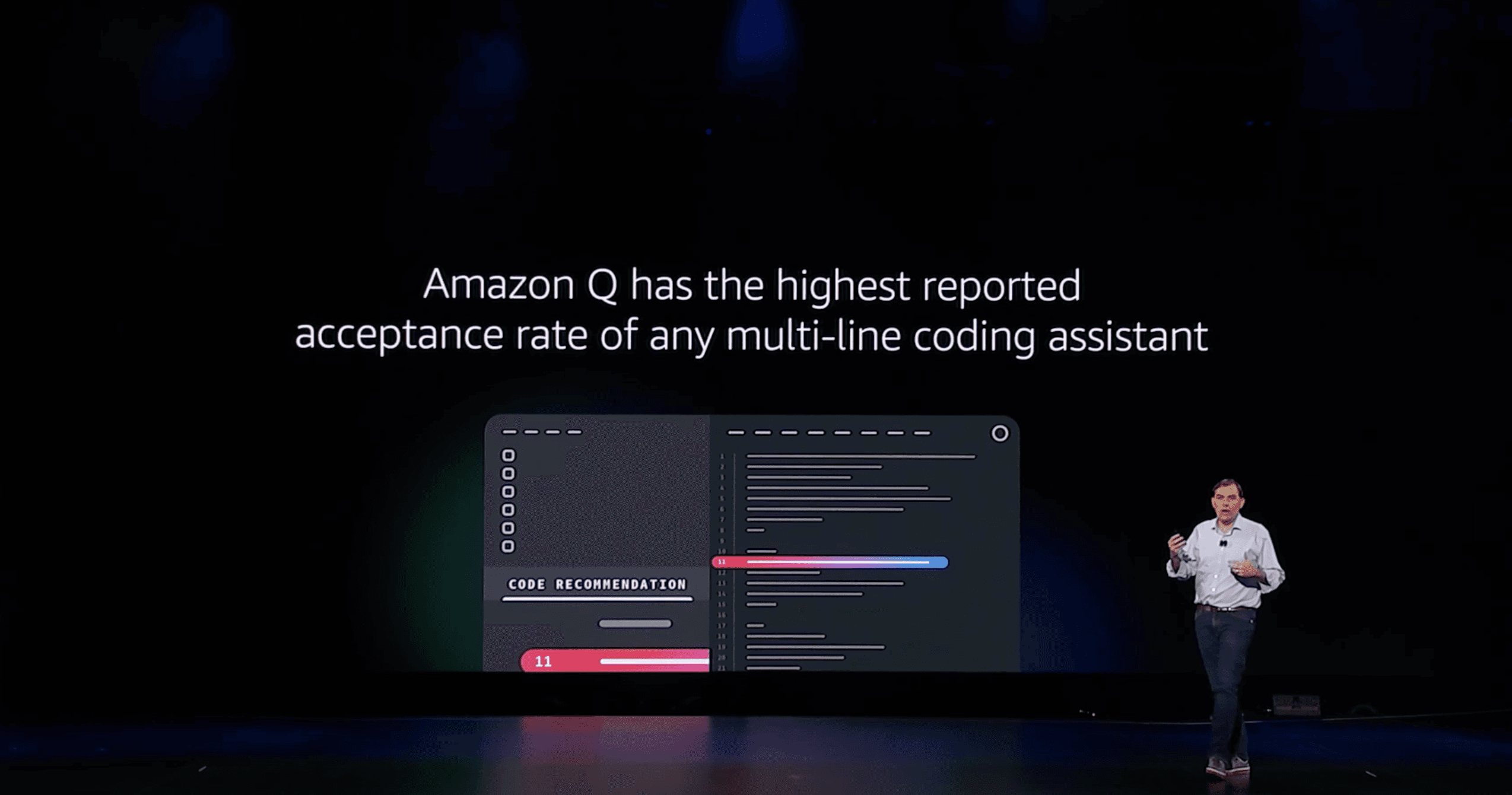
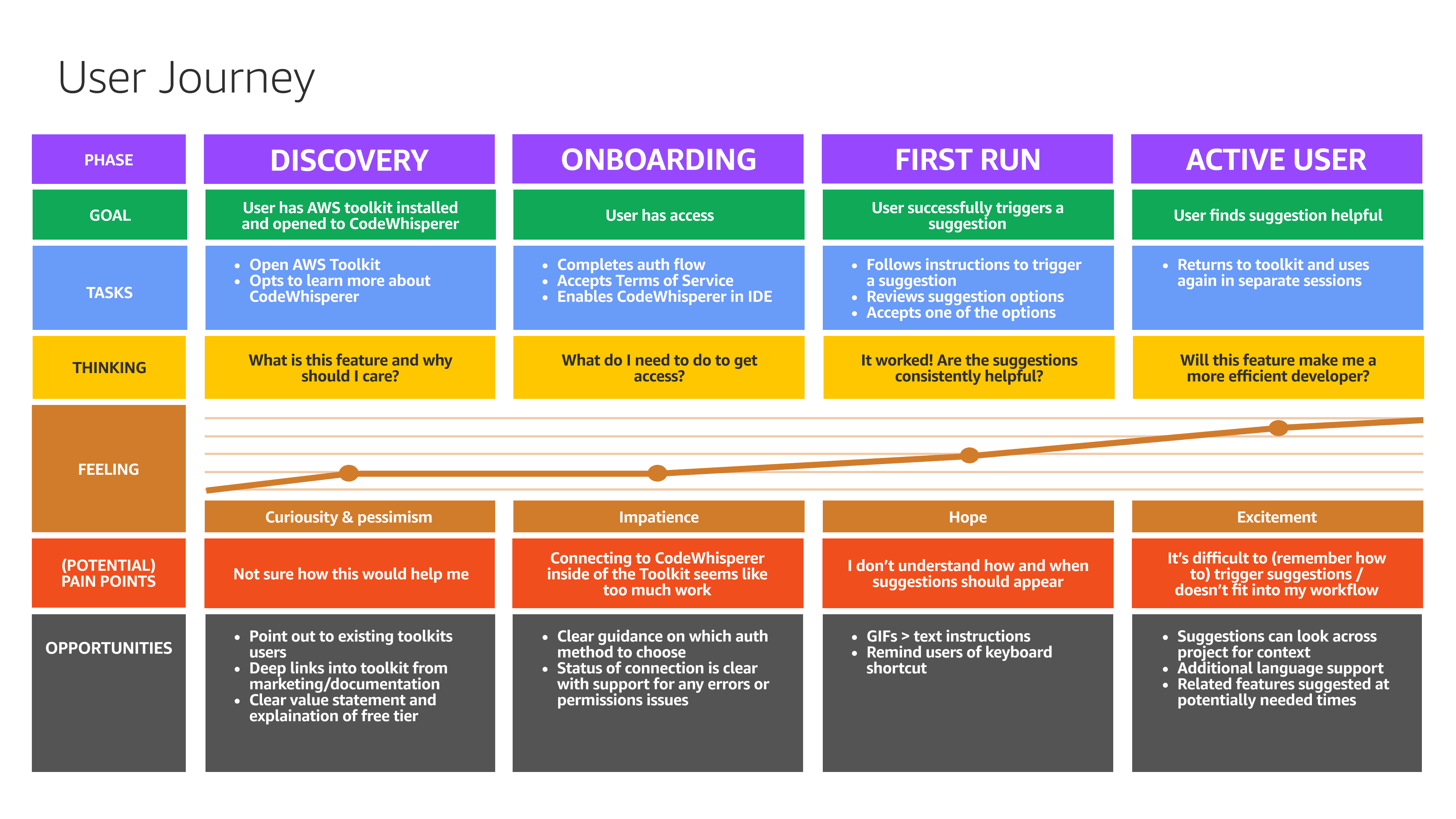
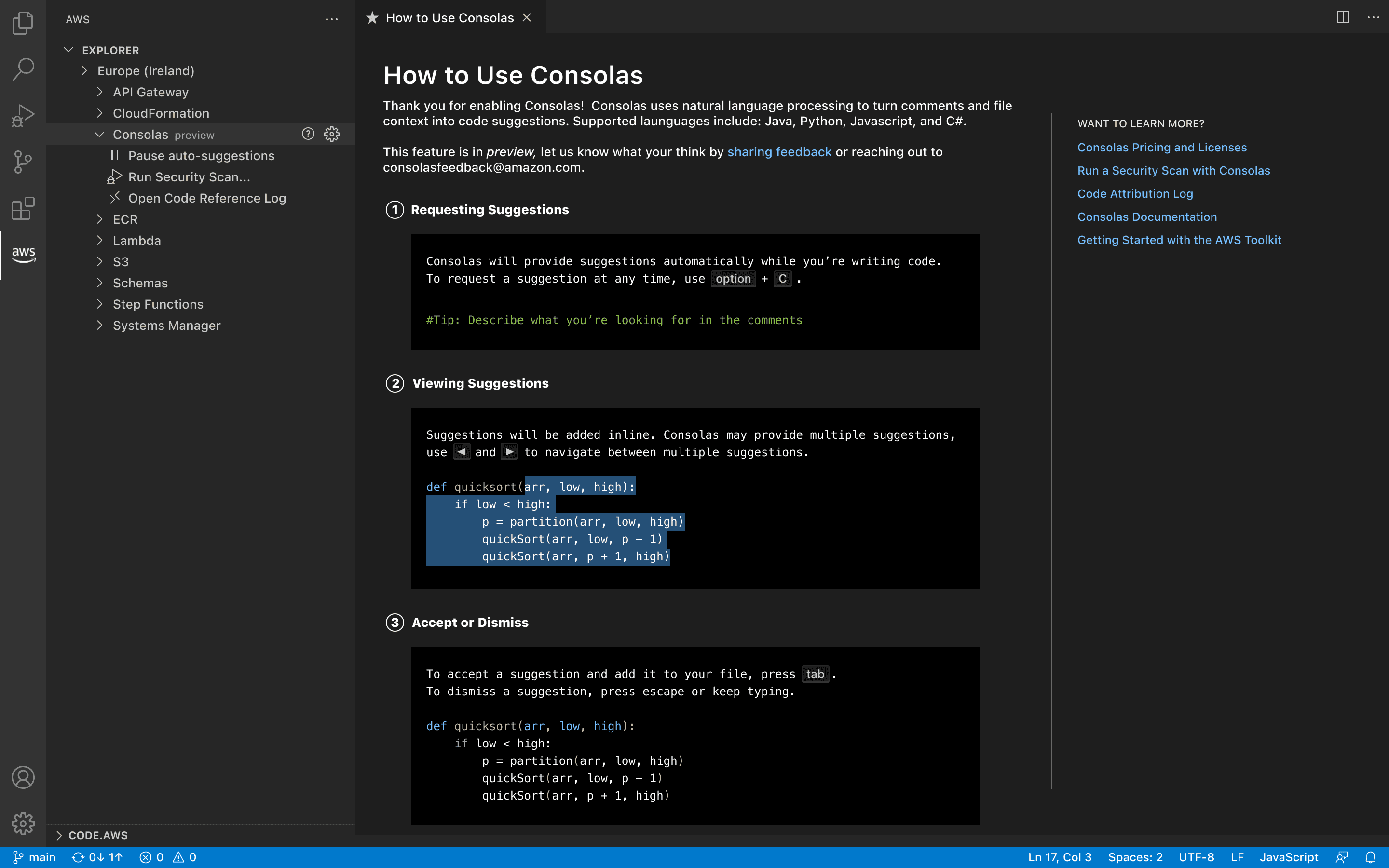
I joined as the first designer to turn an early AI/ML prototype into a usable product that suggests code as developers work. The core challenge was surfacing suggestions without interrupting developers' focus and workflow. Research revealed that developers were hesitant about AI-generated code and wanted full control — which drove a new interaction pattern emphasizing control and transparency. Making suggestions feel snappy and unobtrusive took many iterations; as of 2024, the feature had the highest acceptance rate on the market.
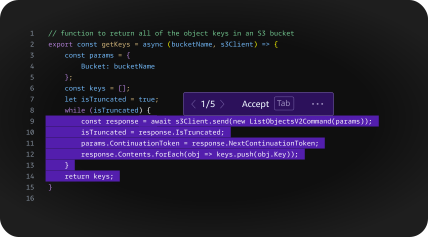

Insights & Iterations
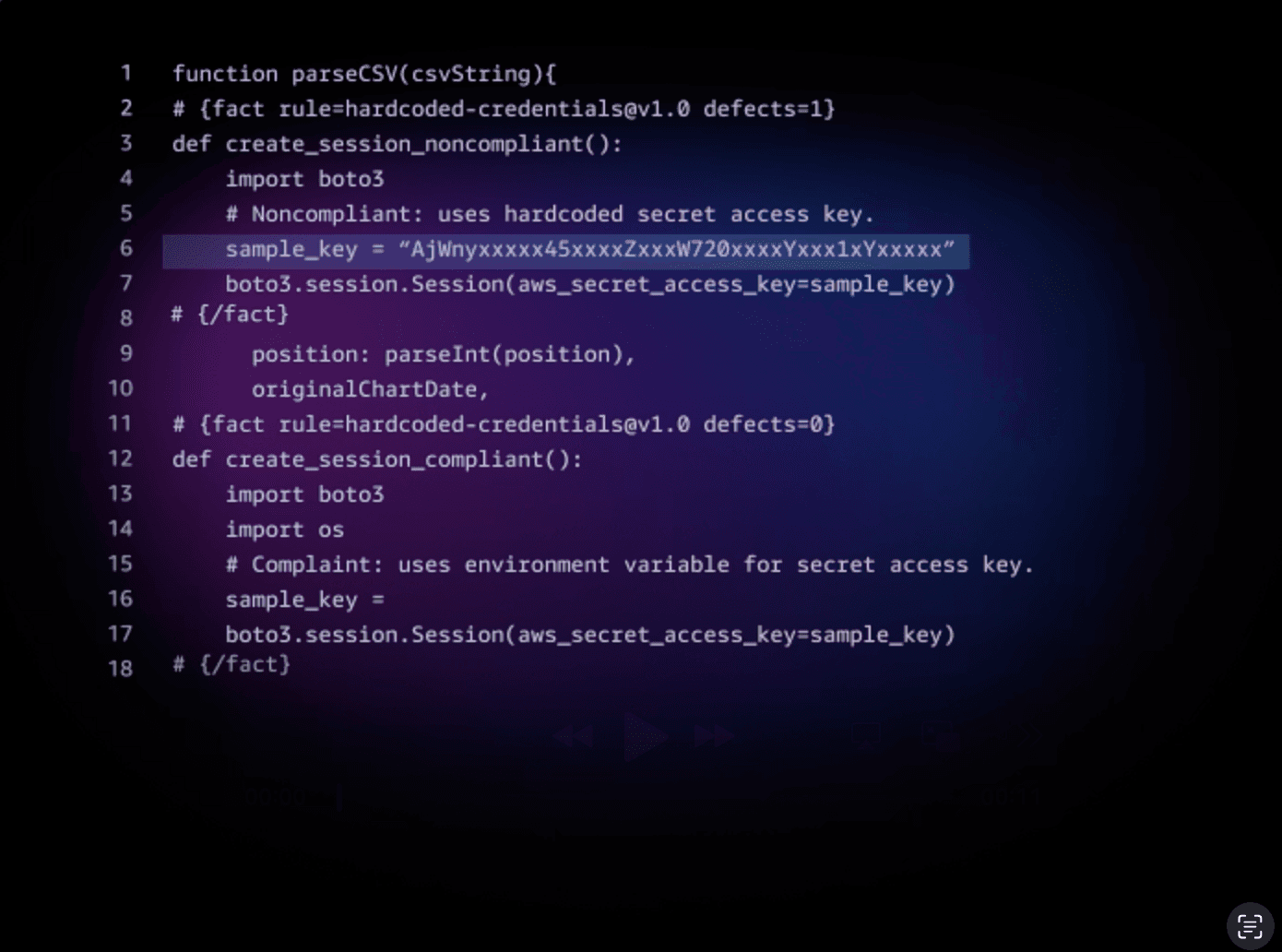
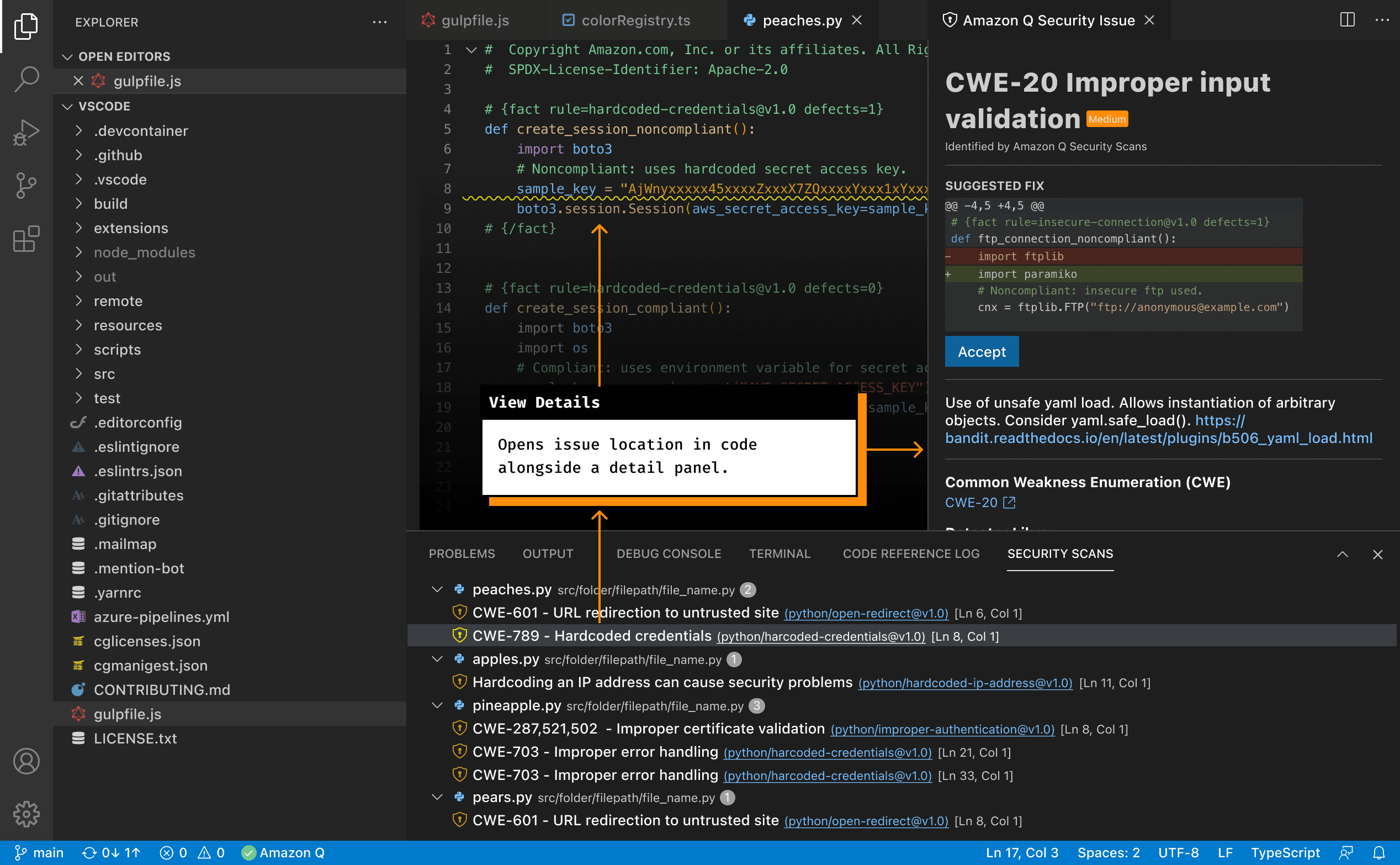
A private beta launched in early 2022 and grew to over 3,000 monthly active beta users. I focused on improving the core experience and exploring new applications — identifying performance and keyboard improvements plus opportunities like security-risk detection and team-specific suggestions. The rollout moved from a closed preview in June 2022 to larger orgs, and a full public launch in early 2023.
Post-launch, the team reimagined the product as a conversational AI assistant for complex, multi-file changes. Testing showed users expected quick responses, needed clear examples, and preferred to start fresh conversations for each task.
Results
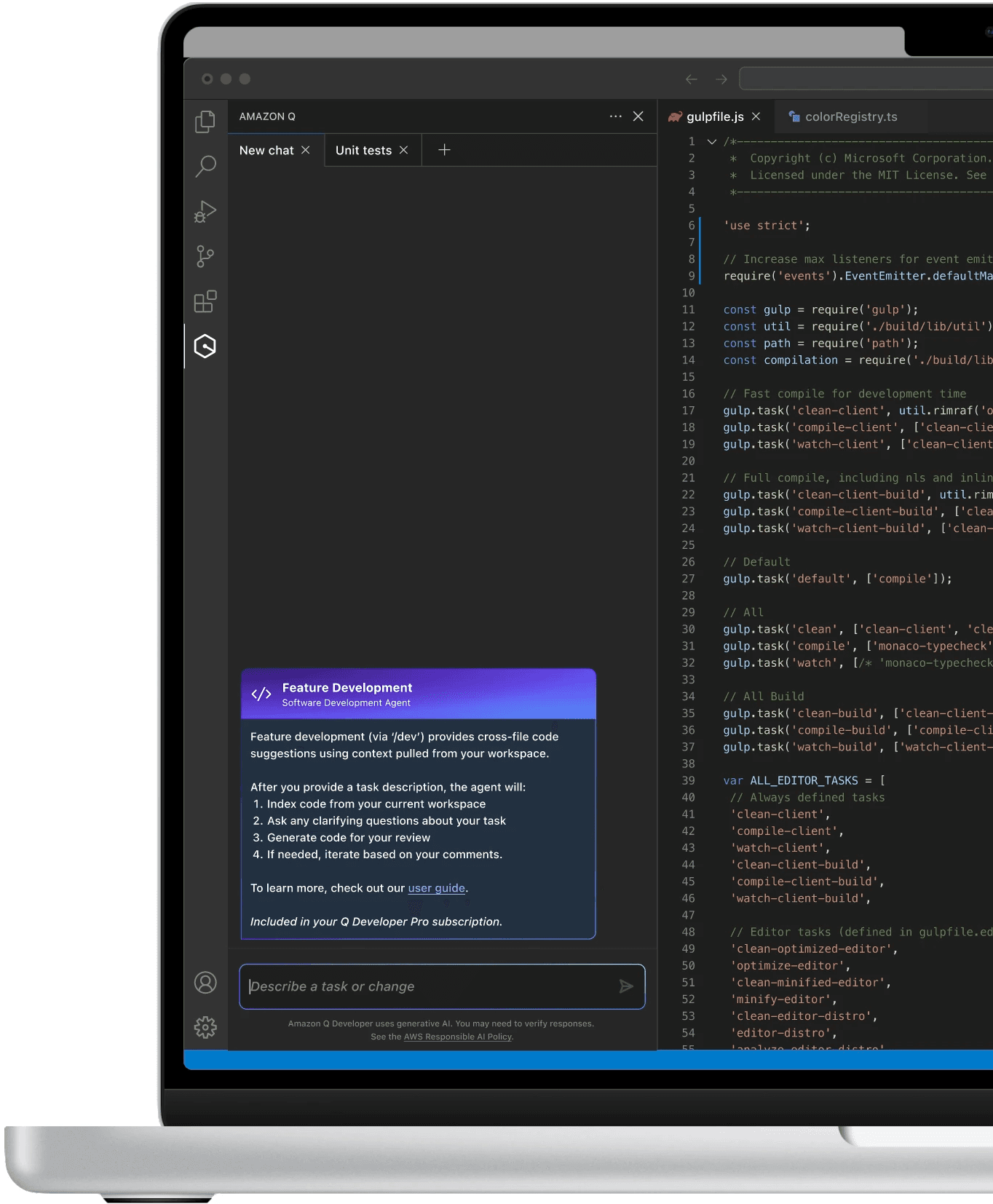
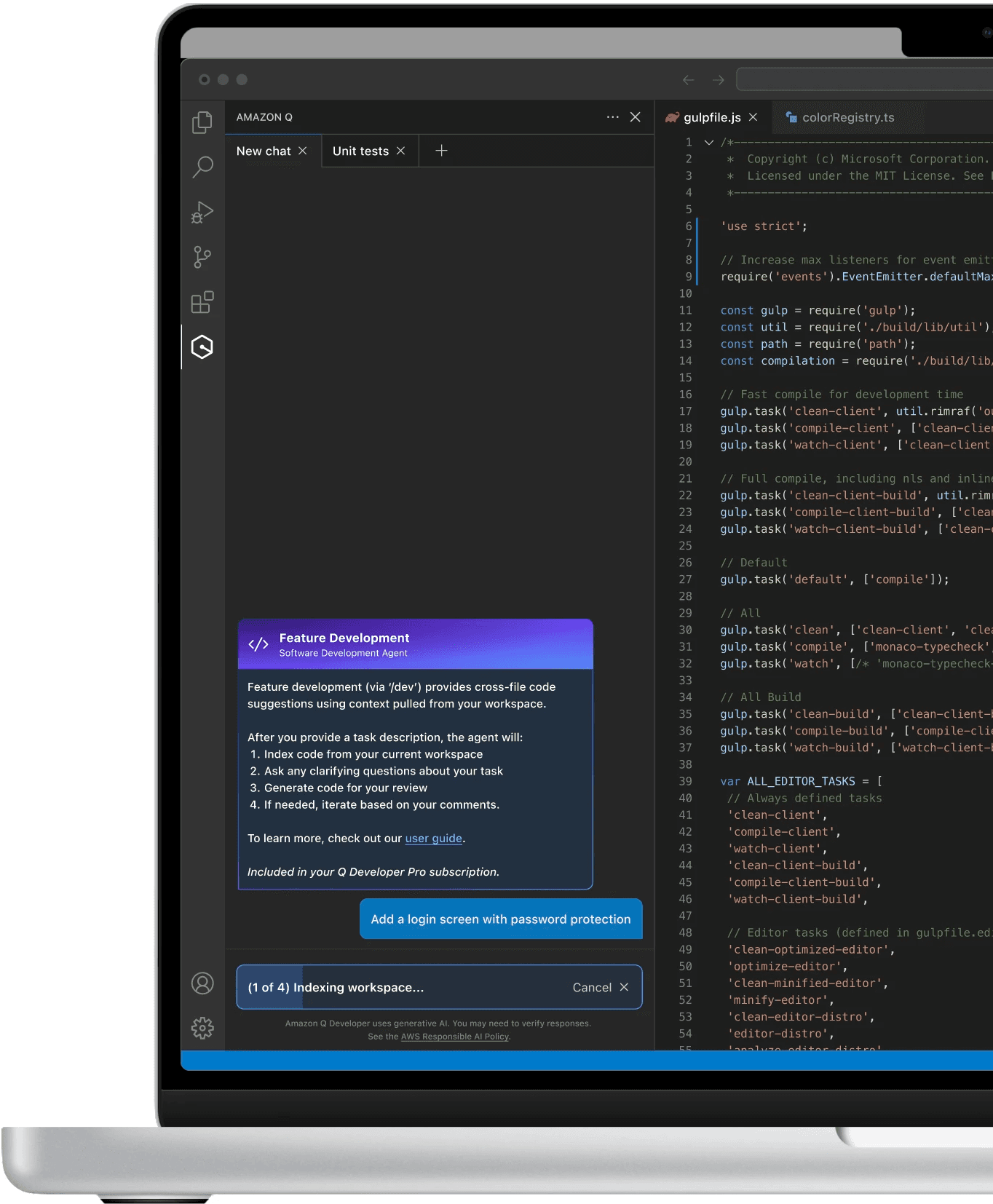
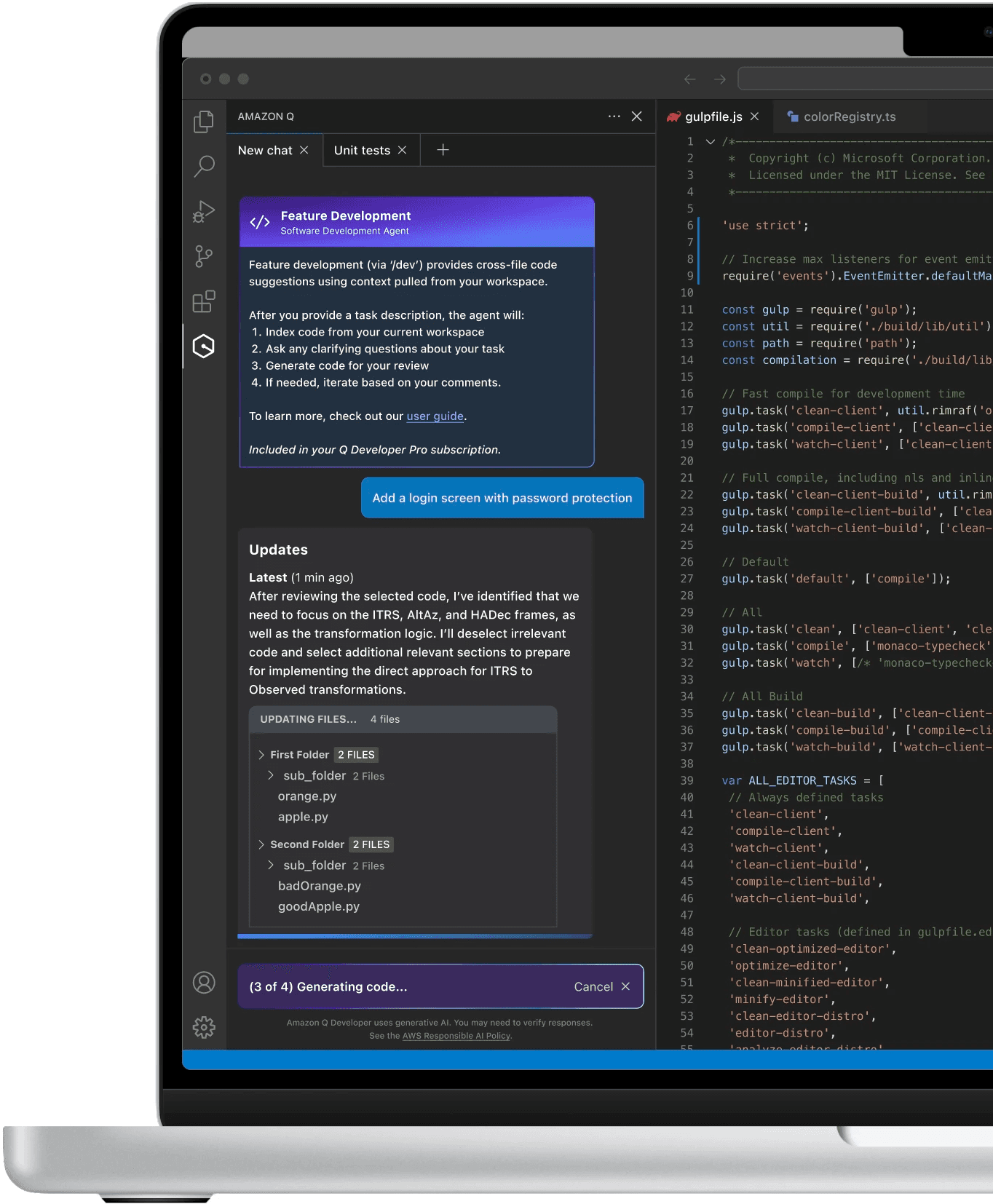
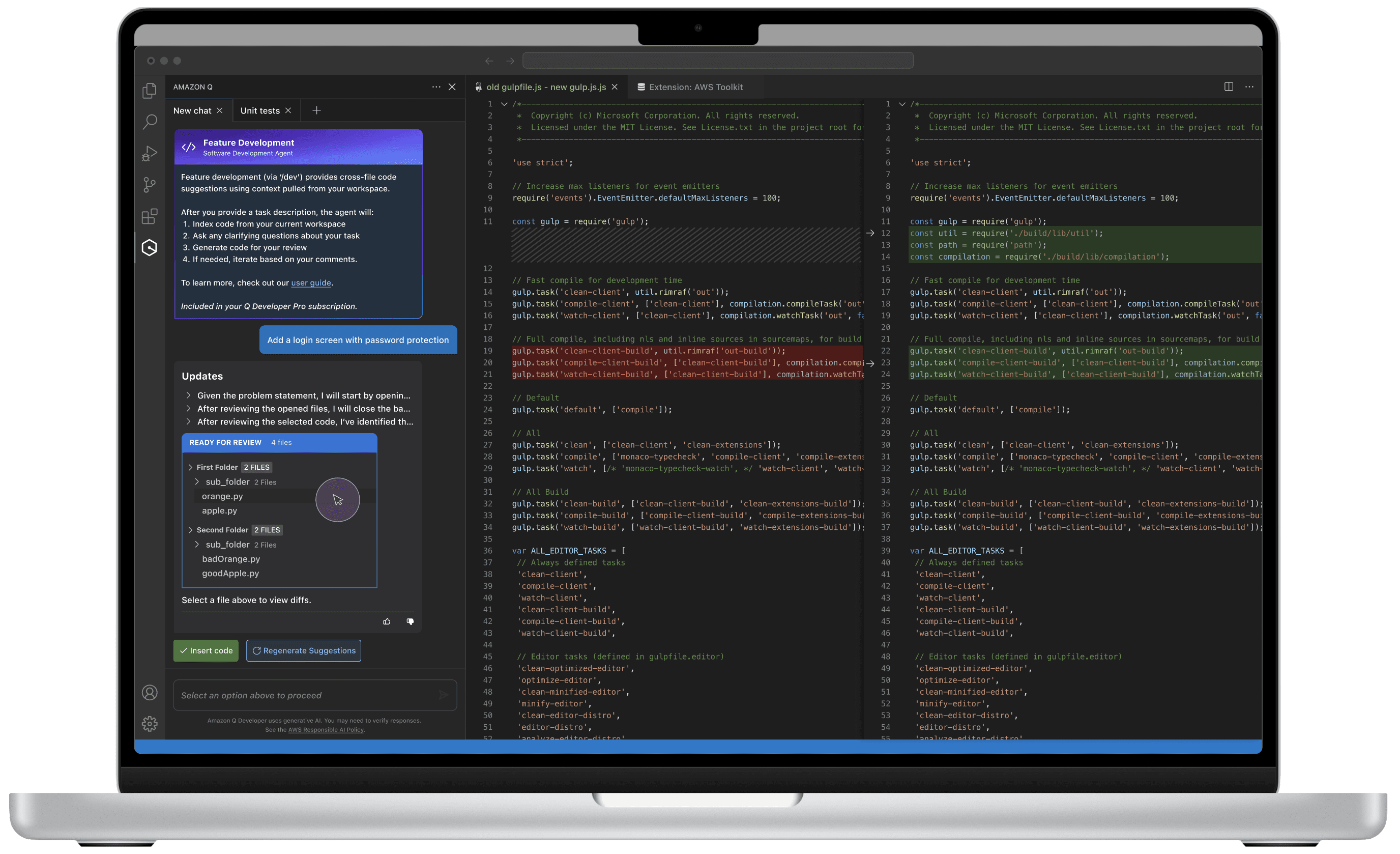
The result was Q Developer Agent, launched to public preview in late 2023 and becoming the #1 verified autonomous code-generation agent (source: SWEbench.com). The agent sets expectations on latency and input up front, provides high-level progress updates for transparency, narrates its logic during code generation, and lets users open a diff view to review changes.
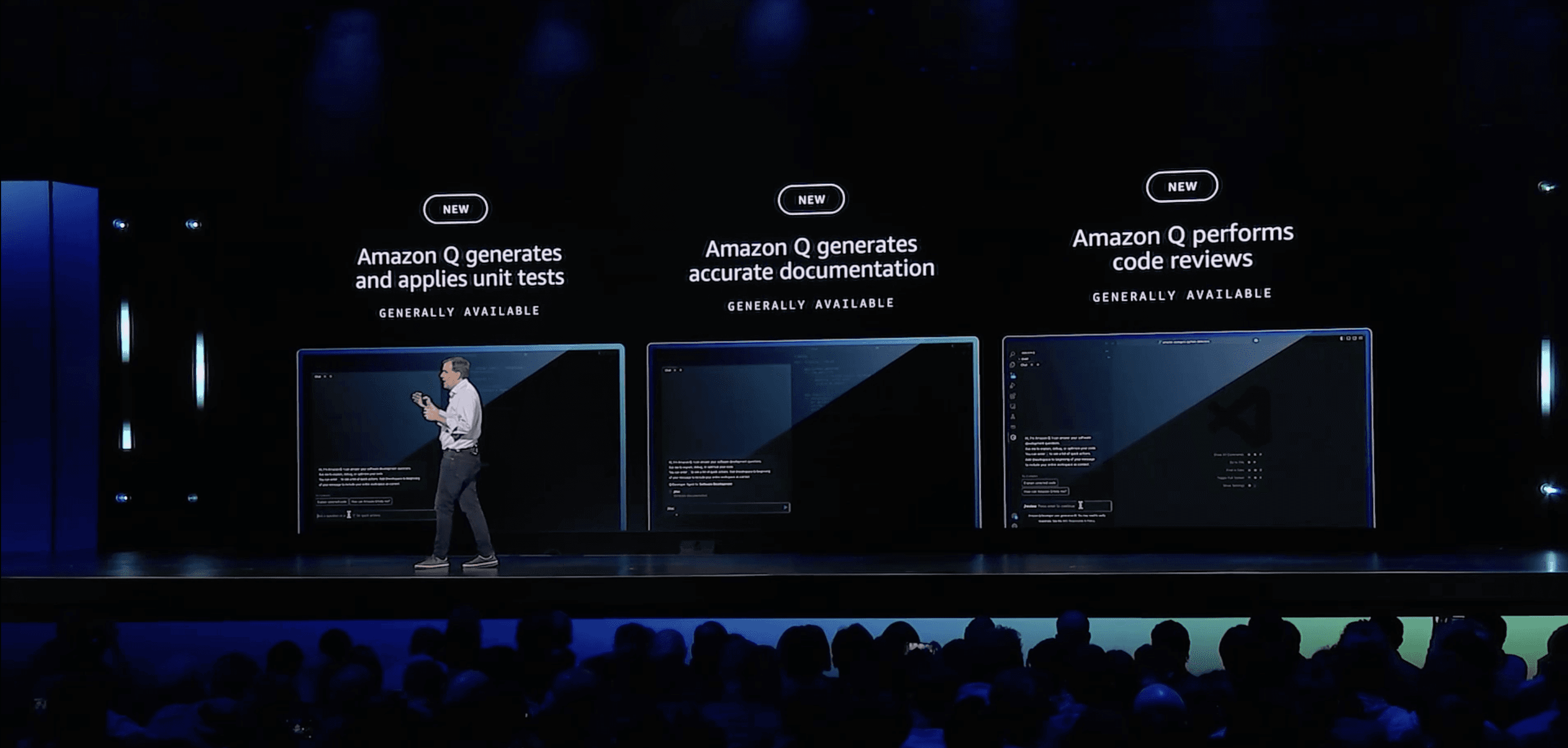
Building on this, I partnered with PMs to create specialized agents for unit testing, documentation, and code reviews. I hired and led two additional designers through 2024, launching a cohesive agent set within Amazon Q in November 2024.