Conversational Design for LLM-based Workflows
How I defined best practices and chat-based interaction patterns for AI-powered developer experiences.
Background
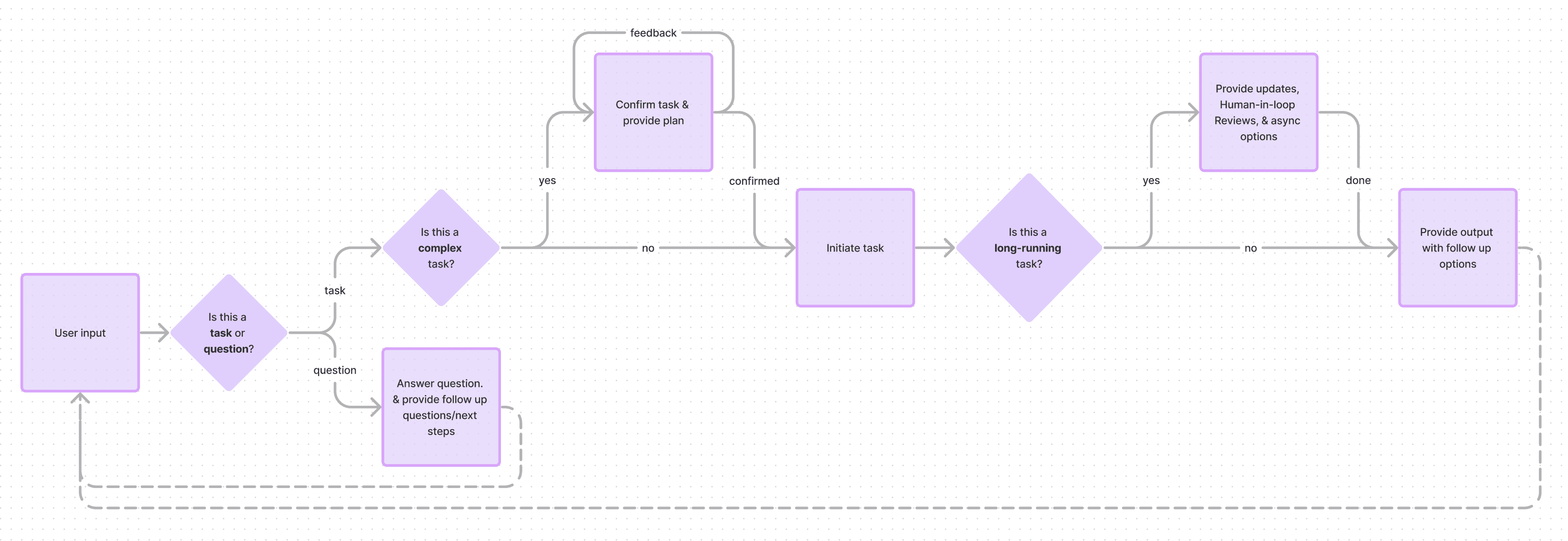
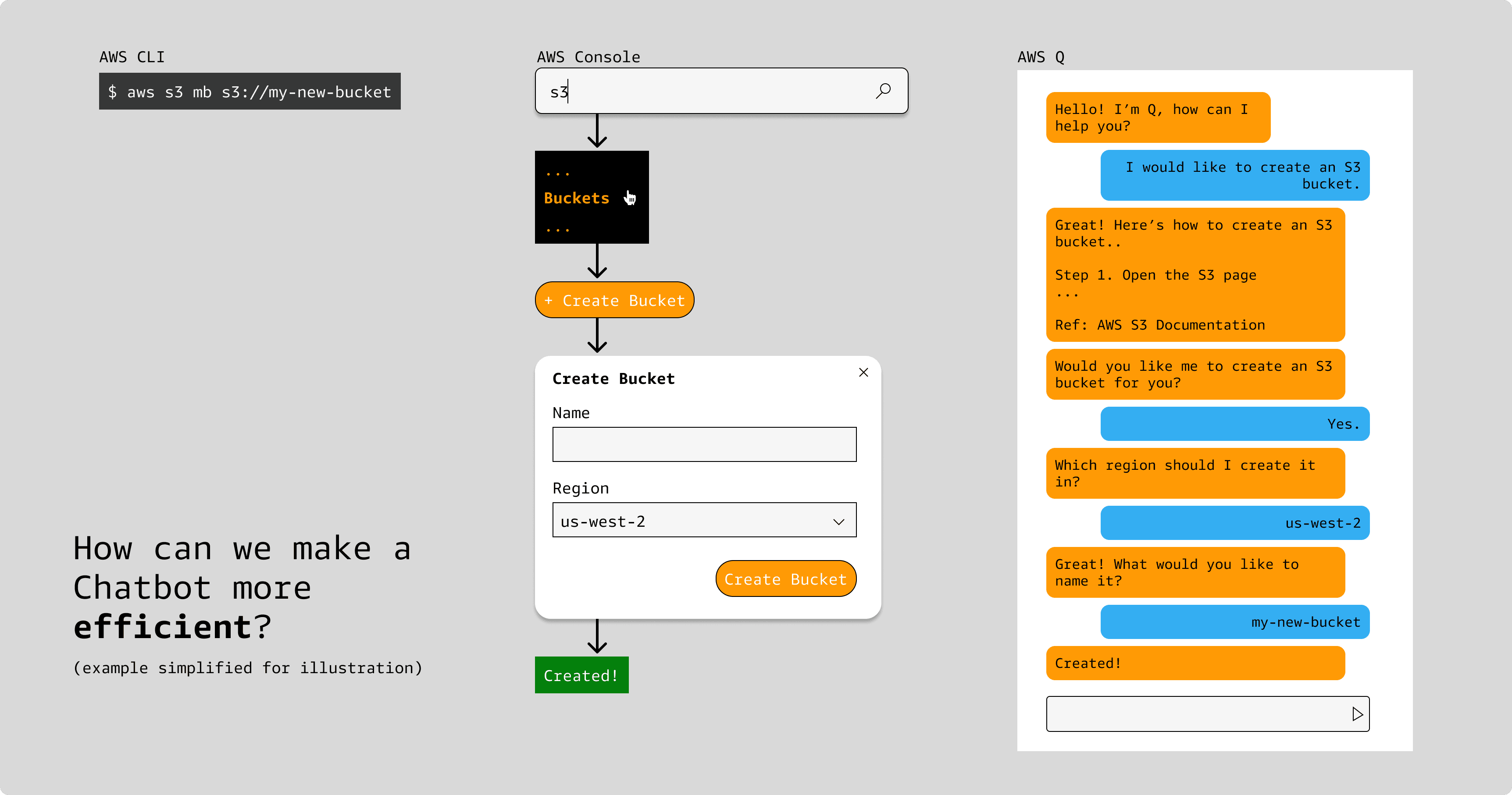
Following the launch of code-completion developer tools, the team received strong demand for a chatbot to support developers. The goal was focusing the experience on software-development tasks rather than general topics. The core challenge: keeping chat flexibility while enabling structured workflows. Traditional approaches that relied heavily on predefined conversation paths wouldn't suffice for the dynamic nature of LLM-based interactions.
Approach
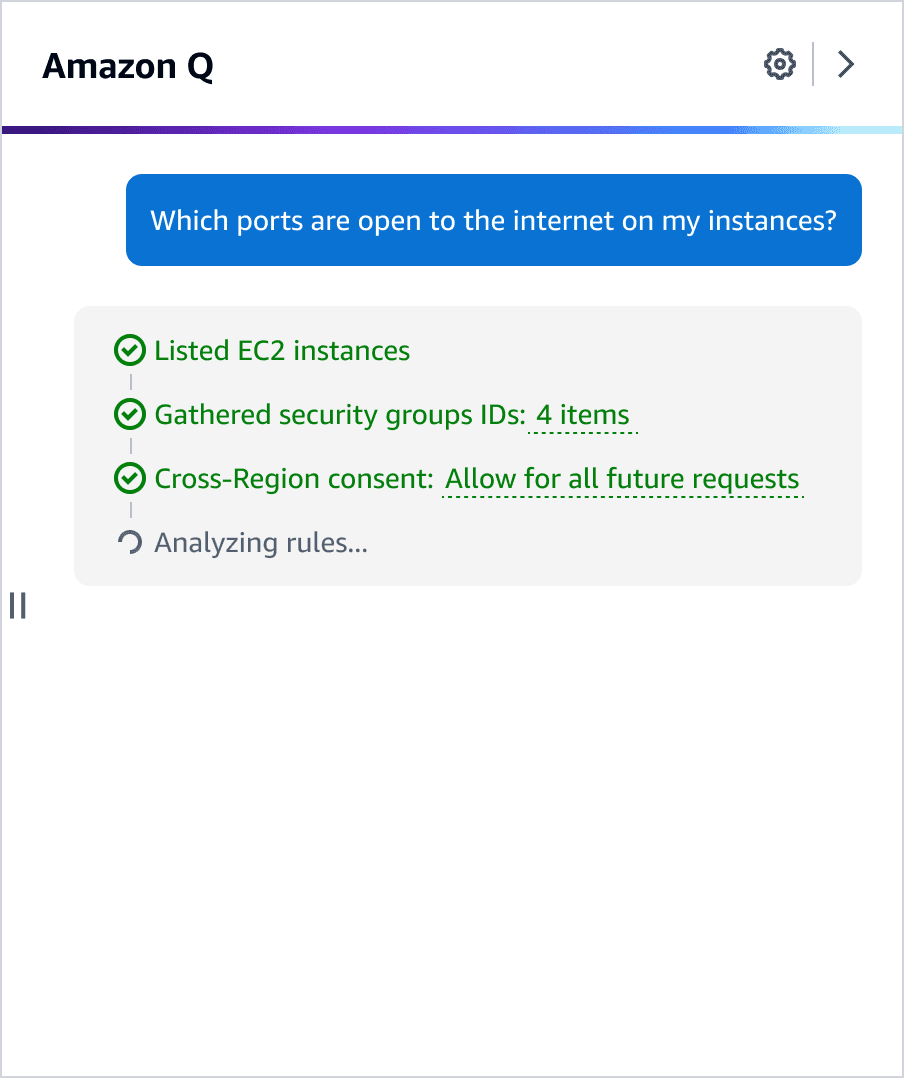
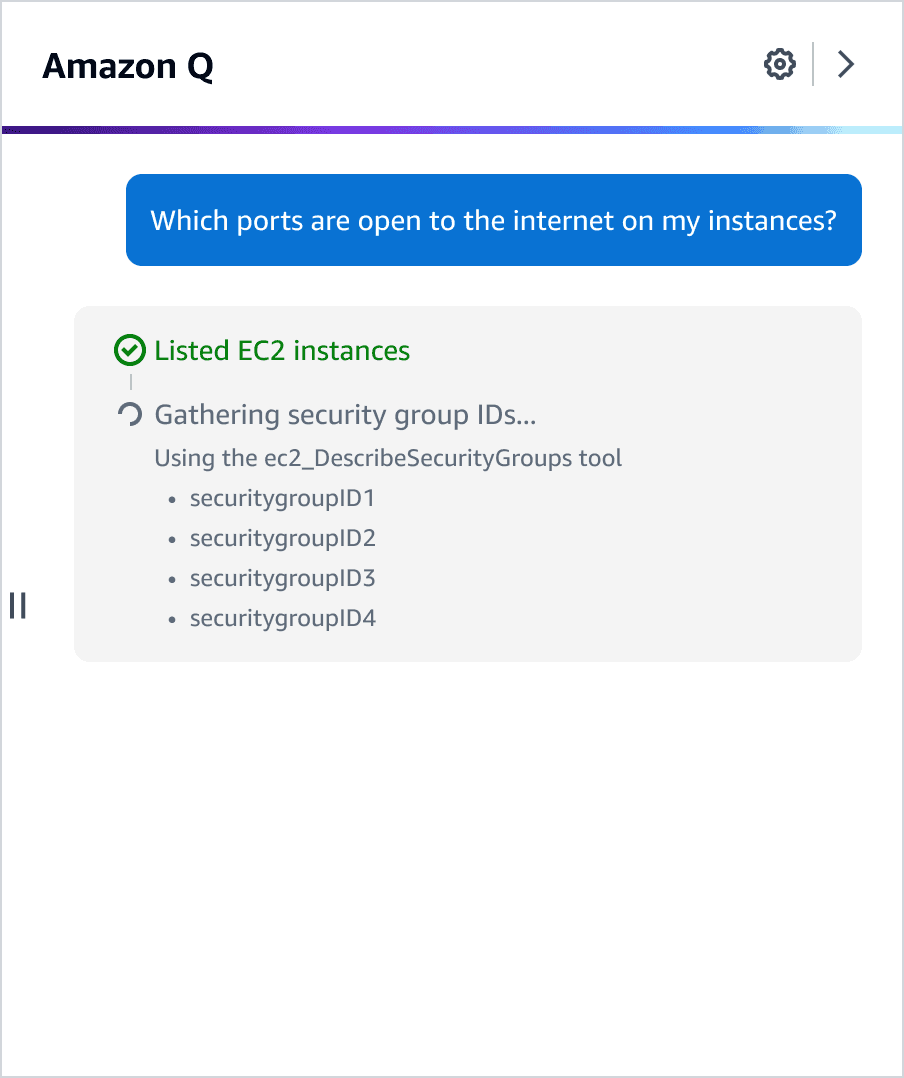
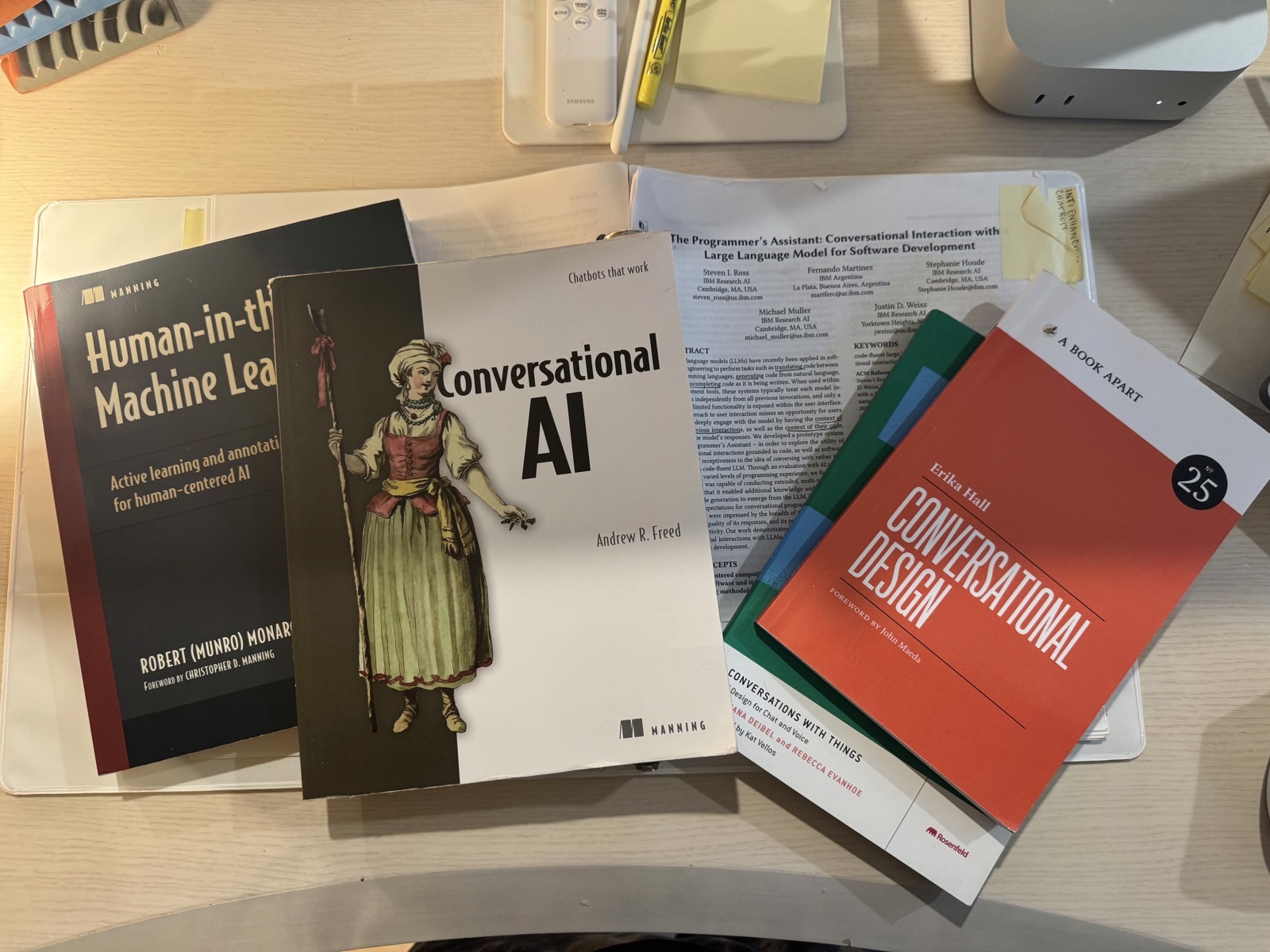
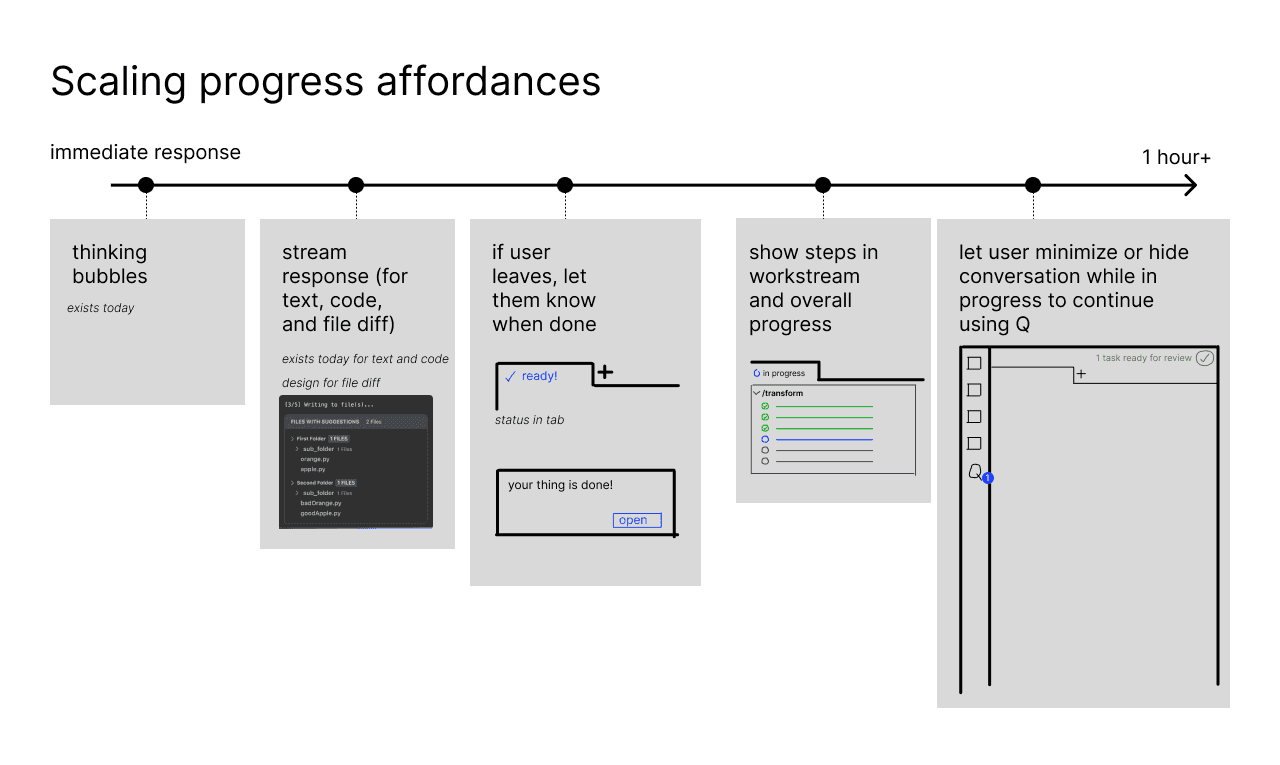
I developed expertise in both conventional conversational design and LLM capabilities through industry research and consultations with Amazon conversational designers. Collaboration with the science team clarified model limitations and how UI and system prompts could guide interactions. A parallel effort with another designer produced a unified UI component system where interaction patterns mapped to visual components. Stakeholder interviews helped surface the key jobs-to-be-done for the initial release.
Results
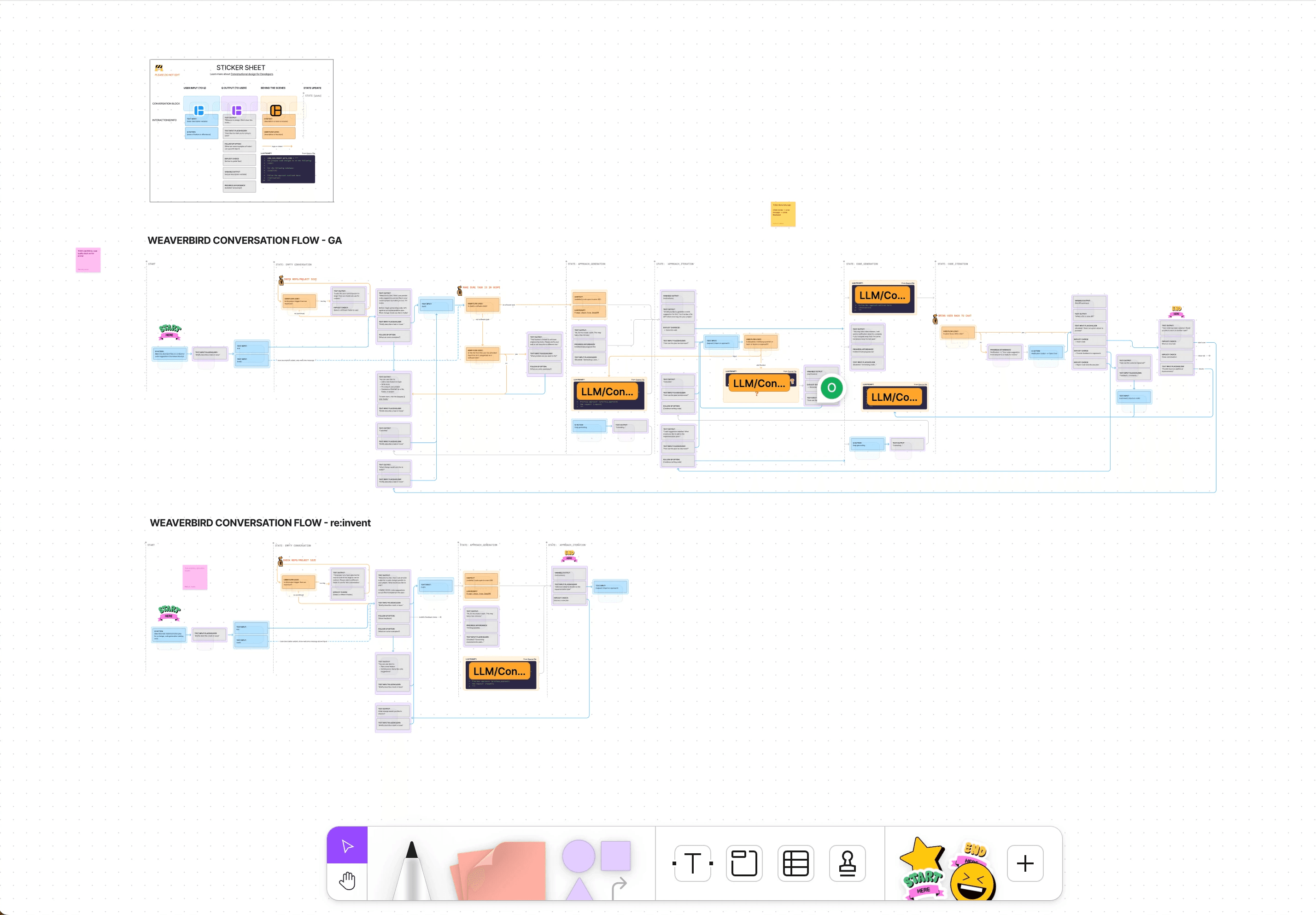
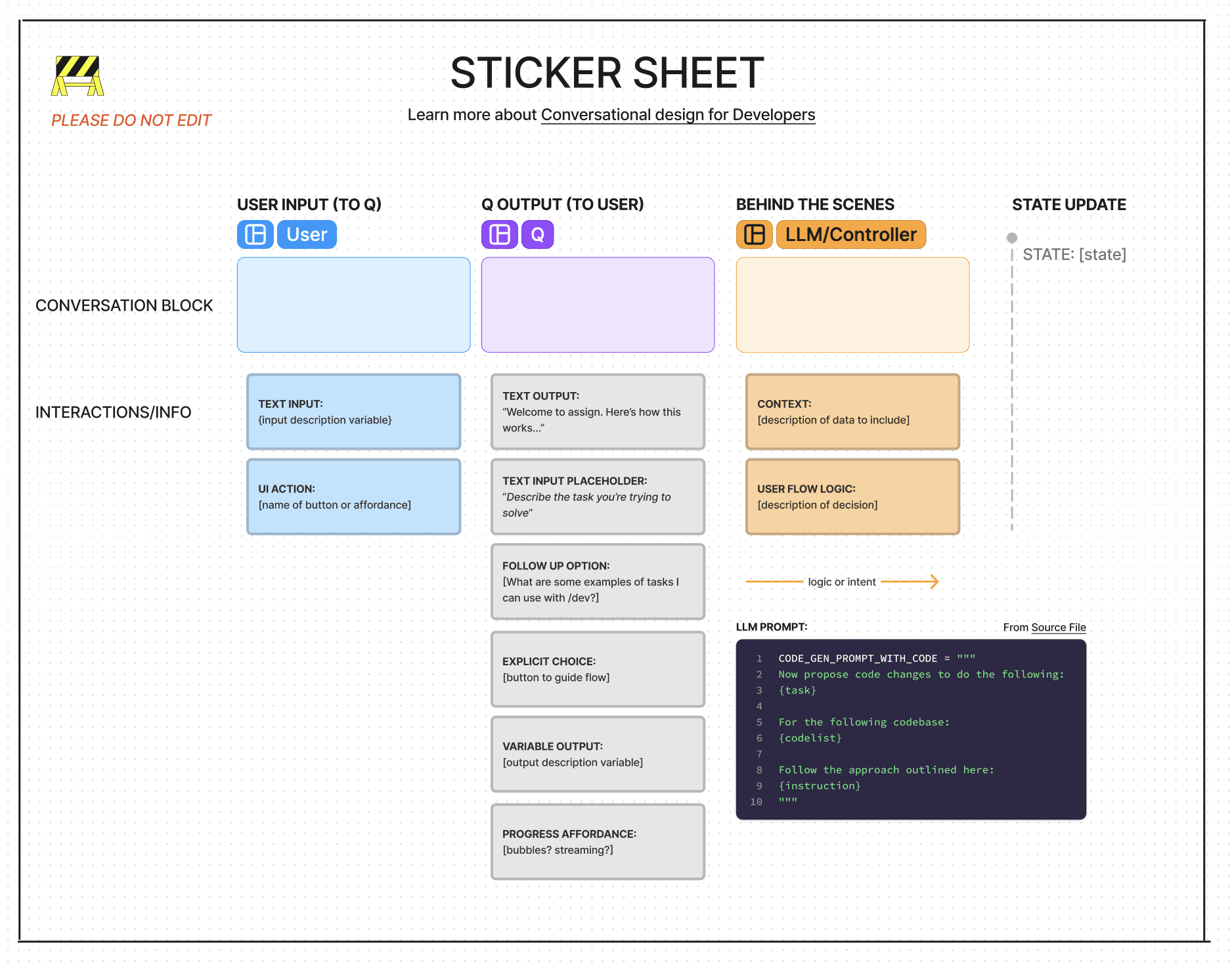
The team delivered a framework that balanced structure and flexibility. I documented best practices and templated artifacts to help AWS teams implement chat features consistently — including a FigJam template with reusable components mapping flows to UI elements. A review process was established for conversational-design artifacts, and voice guidelines for Amazon Q were developed with copywriters, aligned to AWS communication principles. These resources were shared via internal wikis and the AWS UX group.